In the late nineteenth century, chemistry was transforming laboratories, but its reach had barely touched the environments people lived in. Cities were growing quickly, water supplies were inconsistent, and sanitation systems were still developing. The scientific tools to measure these conditions existed, yet few researchers had begun applying them to everyday public health.
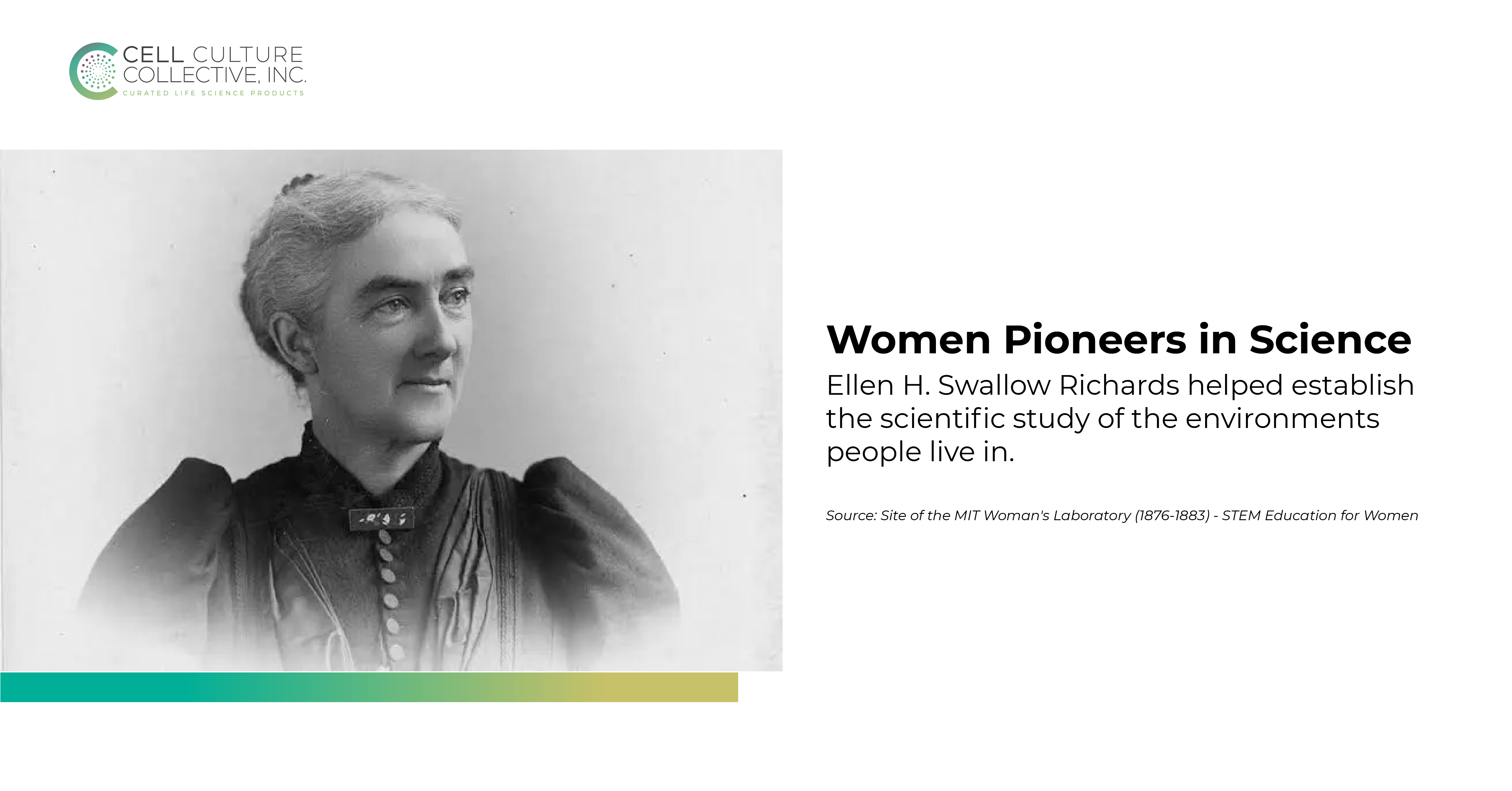
Ellen H. Swallow Richards entered science at precisely that moment. In 1871, she became the first woman admitted to the Massachusetts Institute of Technology, stepping into a field that had little precedent for women in its laboratories.
At MIT, Richards studied chemistry and mineral analysis. She quickly went on to become the institute’s first female instructor. The laboratory became her training ground, where she refined the analytical techniques that would soon be applied far beyond campus laboratories and into the study of water, sanitation, and public health.

Source: Ellen Henrietta Swallow and colleague sampling water, circa 1872. MIT Libraries
The Breakthrough
Ellen H. Swallow Richards’s most influential work began when she turned her chemical training toward one of the most urgent questions of the time: what exactly was in the water people were drinking? In the late nineteenth century, water contamination was widely suspected as a source of disease, yet systematic chemical testing was rare.
Working with the Massachusetts State Board of Health, she helped lead one of the first large-scale chemical investigations of drinking water in the United States. Richards and her colleagues analysed tens of thousands of samples from wells, rivers, and municipal supplies across the state. By measuring chloride levels and other chemical markers, she identified patterns that distinguished naturally occurring minerals from contamination caused by sewage and industrial waste.
From this work, Richards developed what became known as the Normal Chlorine Map of Massachusetts. The map established baseline chloride levels across different regions of the state, allowing scientists to detect when water sources had been polluted beyond natural conditions. It was a powerful tool: once the normal chemical background was understood, deviations could signal environmental danger.
Normal Chlorine Map of Massachusetts
Source: Collection on Ellen Swallow Richards (MC-0659) https://dome.mit.edu/handle/1721.3/200692
The project transformed how water safety was evaluated. Instead of relying on observation or assumption, Richards introduced a model proved by measurement and comparison. Her research helped guide the development of the first statewide water-quality standards and influenced the design of modern sewage treatment systems. In doing so, she demonstrated that chemistry could serve industry and research, along with the health of entire communities.
Why It Matters Today
Today, the safety of drinking water is supported by layers of monitoring, regulation, and scientific testing. Water utilities routinely analyse chemical composition, public health agencies track contamination risks, and environmental scientists monitor how industrial activity affects rivers and groundwater. These systems feel standard now, but they were not always part of public infrastructure.
Ellen H. Swallow Richards helped introduce the scientific approach that made them possible. Her statewide water studies demonstrated that environmental conditions could be understood through consistent chemical measurement. By establishing baseline chloride levels and comparing them across regions, she showed how chemistry could detect contamination long before it became visible or catastrophic. That method of defining what is “normal” and identifying deviations remains central to environmental monitoring today.
Modern environmental chemistry still follows the logic Richards applied more than a century ago: measure the environment carefully, understand natural variation, and intervene when chemical evidence reveals a threat. Whether scientists are tracking industrial pollutants, testing municipal water systems, or studying the effects of climate change on water resources, the principle remains the same.
A Legacy for Women’s History Month
March is widely recognized as Women’s History Month, a time dedicated to acknowledging the contributions of women whose work has shaped science, society, and progress across generations. It is also a moment to reflect on the long history of women who entered fields that were not designed to include them.
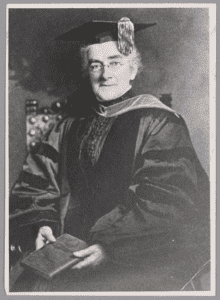
Source: Ellen H. Swallow Richards | Courtesy of MIT Museum
Richards’s work speaks directly to another theme that defines the modern world: sustainability. Her chemical studies of water quality and environmental sanitation showed that the health of communities is inseparable from the health of their surroundings.
Recognizing Richards during Women’s History Month acknowledges more than a scientific achievement. It recognizes the barriers women had to overcome just to participate in science at all. When Richards entered MIT, women were rarely admitted to scientific institutions, and their place in research was constantly questioned. She answered that doubt with work that reshaped how societies understand water safety, sanitation, and environmental health. Her legacy is a reminder that many scientific breakthroughs exist because women insisted on entering spaces that were never meant to include them.
Where Her Work Lives On
Ellen’s influence extended far beyond her own research. Through her work, teaching, and institutional leadership, she helped establish entire areas of scientific study.
- First woman admitted to MIT (1871) and later the institute’s first female instructor, proving that women could participate in advanced scientific research and education.
- Founder of the MIT Women’s Laboratory, which trained hundreds of women in chemistry and scientific analysis at a time when most laboratories excluded them.
- Pioneer of sanitary chemistry and environmental science, applying chemical analysis to water safety, air quality, food, and public health.
- Leader of the Lake Placid Conferences, which helped formalize the scientific discipline of home economics, linking chemistry, nutrition, and sanitation to everyday living conditions.
- Architect of early environmental health thinking, demonstrating that the chemistry of air, water, and food directly shapes human health.
Through these efforts, Richards helped transform chemistry from a laboratory discipline into a science that could safeguard communities and environments.
The Standard She Set
Ellen H. Swallow Richards entered science at a time when the rules of the field had already been written by the other gender. That reality did not stop her from shaping it. At MIT and beyond, she applied chemistry to questions that few scientists had thought to study seriously: the safety of drinking water, the quality of air in homes, and the chemical conditions that influence public health.
Richards’s legacy lies in the systems that grew from that work. Water monitoring, environmental standards, and the scientific study of living conditions all reflect the path she helped open. Her career makes a simple point clear. When women enter science, they do not simply follow the field as it exists. They expand its boundaries and redefine what science can accomplish.