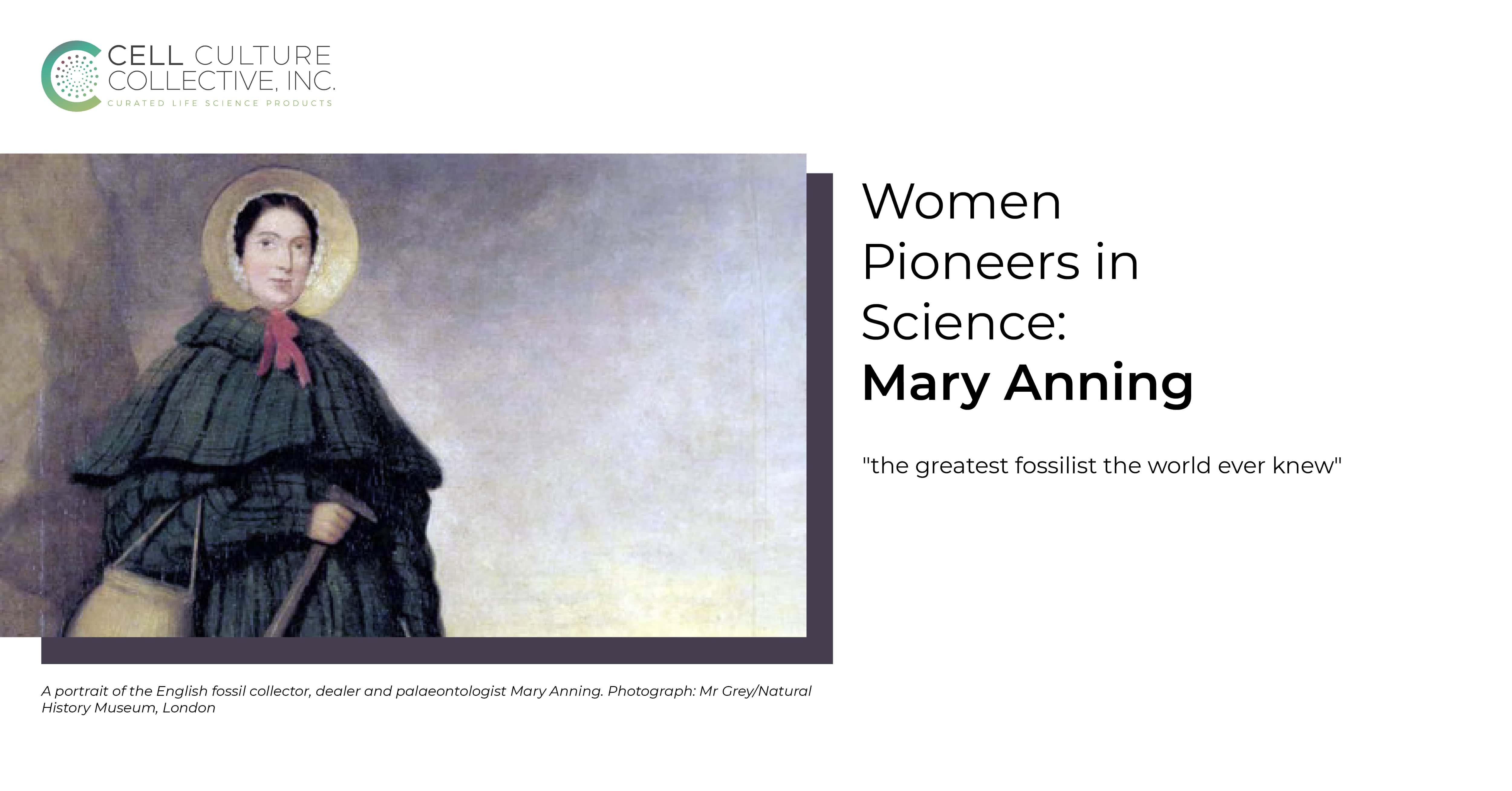
Mary Anning is one of the most consequential figures in the history of natural science and one of the least credited. Born in 1799 in the coastal town of Lyme Regis, England, she spent her life excavating fossils from the cliffs along the Jurassic Coast, making discoveries that fundamentally altered scientific understanding of prehistoric life on Earth.
Her findings contributed to changes in scientific thinking about prehistoric life and the history of the Earth Wikipedia, at a time when the concept of extinction was still deeply controversial, and when women, particularly those from working-class backgrounds, were categorically excluded from scientific institutions. Anning had no formal education, no institutional affiliation, and no safety net. What she had was an extraordinary eye, a disciplined mind, and an unrelenting commitment to her work. The fossils she pulled from those cliffs filled the museum cases while helping build the foundation of modern palaeontology.
The Breakthrough
The cliffs at Lyme Regis are part of what is now known as the Jurassic Coast, a stretch of shoreline where 185-million-year-old rock layers erode continuously into the sea, exposing fossils that exist nowhere else in such abundance. Anning knew these cliffs intimately. She walked them daily, in all weather, racing the tides to retrieve specimens before the ocean swallowed them whole. It was painstaking, physically dangerous work. And she did it from the age of eleven, after her father’s death left the family in debt with no other means of survival.
In 1811, when Anning was just twelve years old, she uncovered the first correctly identified ichthyosaur skeleton, a 5.2-metre marine reptile that had roamed the oceans some 200 million years ago. Remarkably, this specimen contained fish bones in its stomach, providing early insights into ancient food chains. Scientists at the time struggled to classify it. The leading assumption was that any unrecognisable creature must be a known animal from a distant land. It took years before the specimen was formally recognised as an entirely extinct species, something that had no living descendants. This was a radical idea. At the time, the notion that God’s creation could simply cease to exist was scientifically and theologically contentious.

One of Mary’s detailed sketches – source: nhm.ac.uk
Then, in 1823, came the discovery that would define her legacy. Anning was the first to uncover a complete skeleton of a Plesiosaurus, a long-necked marine reptile so unusual in form that rumours spread almost immediately that the fossil was a fake. Georges Cuvier, the most authoritative anatomist in Europe, expressed serious doubt and when Cuvier doubted, the entire scientific community followed. A special meeting was convened at the Geological Society of London to examine the find. Anning was not invited to attend. The specimen was authenticated. She received no formal credit.
She also discovered Britain’s first pterosaur in 1828, the first such specimen found outside Germany and in 1829 excavated Squaloraja, a fossil fish representing an evolutionary link between sharks and rays. Beyond the specimens themselves, Anning identified that the oddly shaped fossils known as “bezoar stones” were in fact fossilised faeces coprolites found in the abdominal region of ichthyosaur skeletons, containing evidence of what these animals ate. It was a sophisticated anatomical inference, not a lucky find. She had taught herself geology, anatomy, and scientific illustration from borrowed books. She was, by every measure, doing science just without the title.
| Quick Fact:
As a cabinet maker, Mary’s father didn’t make much money, so he increased the family’s income by searching the seashore for fossils, which were then referred to as “curiosities,” and selling them to tourists. Joining him were young Mary and Joseph, who fell deeply in love with fossil digging. |

A specimen of Ichthyosaurus anningae that was discovered by Mary Anning – source: nhm.ac.uk
Why It Matters Today
Anning’s discoveries forced a fundamental rethinking of Earth’s history. The ichthyosaurs, plesiosaurs, and pterosaurs she found provided critical support for the idea that there had been an “age of reptiles”, an extended geological era in which giant reptiles, not mammals, were the dominant form of life on Earth. This was not a minor scientific footnote. It was one of the conceptual pillars upon which modern evolutionary biology and palaeontology were built.
For researchers working today in palaeontology, marine biology, and evolutionary science, Anning’s legacy is embedded in the very specimens still being studied. One of her ichthyosaur finds, a 195-million-year-old specimen so well preserved that fish bones from its last meal are still visible inside its ribcage, has recently been re-identified as a juvenile of Ichthyosaurus anningae, a species named in her honour. Her fossils are active research subjects.
Her legacy also continues to inspire new generations of scientists and explorers. In May 2020, an eleven-year-old girl unearthed fragments of an ichthyosaur along the English coast not far from where Anning made her first discovery in 1811. Nearly two centuries later, the cliffs of Lyme Regis are still yielding answers because Anning taught the world where to look.
Why This Month
The creatures Anning pulled from the cliffs of Lyme Regis were not land animals. They were marine reptiles, ancient inhabitants of a prehistoric ocean that covered what is now southern England. Her discoveries of ichthyosaurs, plesiosaurs, along with her identification of coprolites and belemnite ink sacs, linked different elements of ancient marine ecosystems in ways that scientists had never before been able to visualise. She was, in the truest sense, a pioneer of prehistoric ocean science.
June is the month the world turns its attention to the ocean. World Ocean Day, observed globally on June 8th, is a reminder of how much of Earth’s story is written in the sea and how much of that story remains unread. It is difficult to think of a more fitting moment to reflect on Mary Anning’s contribution to science.
June also carries the spirit of exploration of pushing beyond the boundaries of what is known, into territory that others have not yet charted. That is precisely what Anning did, every single day, on those cliffs. This month, as the scientific community renews its commitment to understanding and protecting the world’s oceans, her work feels historically relevant, and urgently alive.
Legacy & Recognition
For most of her life, Mary Anning was known in Lyme Regis as a fossil seller. The scientific establishment knew her work intimately and her name barely at all. Male scientists who frequently bought the fossils Anning would uncover, clean, prepare, and identify often failed to credit her discoveries in their scientific papers. She became the first woman memorialized by the Geological Society of London, the same institution that had never allowed her to join.
Recognition came slowly, and largely after her death. In 2010, the Royal Society named her one of the ten most influential women scientists in British history. The Jurassic Coast, where she spent her entire working life, is now a UNESCO World Heritage Site. Her ichthyosaur, plesiosaur, and pterosaur specimens are on permanent display at the Natural History Museum in London, where they continue to draw visitors from around the world. Several species have been named in her honour, including Ichthyosaurus anningae and the plesiosaur Anningasaura.
Scientists who work directly with her specimens today are unambiguous in their assessment. Her fossils are still being studied, and her legacy is considered crucial to the understanding of prehistoric marine life. The delay in recognition does not diminish what she built. If anything, it makes the body of work more remarkable, achieved entirely on her own terms, against every institutional barrier her era could construct.

Scientists of Natural History Museum at Lyme Regis, 2003 – source: nhm.ac.uk
Mary Anning worked at the edges of what her world would allow and she expanded those edges permanently. The fossils she discovered, the anatomical observations she made, and the scientific conversations she drove forward did not belong to her era alone. They belong to the ongoing project of understanding life on Earth.
For those working in the life sciences today, her story is a reminder that rigorous, transformative science can come from anywhere and that the integrity of the scientific record depends on whose contributions are acknowledged, preserved, and built upon. The work of recognising overlooked pioneers is itself a scientific act. It corrects the record. It ensures that future researchers inherit the full picture.
The cliffs of Lyme Regis are still being walked. The fossils are still emerging. And the questions Anning first thought to ask are still shaping the answers science is working towards.